
Trademark prosecution process displayed on a laptop, showing application filing, examination, office actions, and registration steps.

Trademark Prosecution Explained: From Application to Registration

Trademark prosecution is the legal process of securing trademark rights, from the moment an application is filed until the mark is officially registered. For businesses and brand owners, understanding this factor is essential. A smooth prosecution process means stronger brand protection and fewer legal obstacles later.

What Is Trademark Prosecution?

Trademark prosecution refers to all interactions with the trademark office after submitting a trademark application. It includes examination, responding to objections, handling oppositions, and finally receiving registration. This process ensures your trademark is distinctive, compliant with the law, and eligible for legal protection. Many applicants assume filing is the end of the journey. In reality, this factor plays a deciding role in whether your trademark survives or is rejected.

Step 1: Filing the Trademark Application

Trademark prosecution begins with filing an application containing essential details such as the mark, owner information, and applicable goods or services. Proper classification and accurate descriptions are critical at this stage. Errors here can invite objections later and delay registration. A well-prepared application sets the foundation for a smoother stage of prosecution journey.

Step 2: Examination by the Trademark Office

Once filed, the application is reviewed by a trademark examiner. The examiner checks for statutory compliance, conflicts with existing trademarks, and potential grounds for refusal such as lack of distinctiveness or descriptiveness. If issues are found, the examiner issues an official examination report or office action. This is a common and normal part of this, not a rejection.

Step 3: Responding to Office Actions

Responding to office actions is one of the most critical stages of the prosecution factor. The applicant must address objections within the prescribed time limit using clear legal arguments, evidence, or amendments. Poorly drafted responses or missed deadlines can result in abandonment of the application. Strategic responses significantly increase the chances of approval and move the trademark closer to registration.

Step 4: Publication and Opposition In Trademark Prosecution

If the examiner is satisfied, the trademark is published for public opposition. During this period, third parties can challenge the registration if they believe it conflicts with their existing rights. Handling oppositions requires legal expertise, as arguments must be precise and well-supported. Successful defense during this stage is a major milestone.

Step 5: Trademark Registration Factors For Trademark Prosecution

If no opposition is filed, or if opposition is resolved in the applicant’s favor, the trademark proceeds to registration. At this point, this factor concludes with the issuance of a registration certificate, granting exclusive rights to use and protect the mark.

Why Trademark Prosecution Matters

This is not just a legal formality. It determines the strength, scope, and enforceability of your trademark rights. Mistakes during prosecution can limit protection or lead to rejection, costing time and money. Working with professionals who understand trademark prosecution helps avoid delays, manage objections effectively, and protect your brand long term.

Final Thoughts

Trademark prosecution is a structured yet flexible process that demands attention, strategy, and timely action. From application to registration, each step plays a vital role in securing brand identity. With the right approach, trademark prosecution becomes a powerful tool to safeguard your business and its reputation.

Common Patent Renewal Mistakes and How to Avoid Them

Maintaining your patent is just as important as securing it in the first place. Many inventors and businesses in the UK overlook this crucial step, and as a result, valuable intellectual property can lapse. Understanding common pitfalls in the patent renewal process can save you both time and money.

1. Missing Renewal Deadlines
One of the most frequent patent renewal mistakes is simply missing the renewal deadline. In the UK, patents need to be renewed annually after the initial grant period. Forgetting even a single renewal date can lead to the patent becoming invalid, leaving your invention unprotected. To avoid this, consider using a reliable patent renewal service that can track deadlines and alert you in advance.

2. Incorrect Payment Amounts
Renewal fees may vary depending on the year of your patent. Paying the wrong amount can result in late fees or even rejection of the renewal. Many inventors assume a flat fee applies every year, which is a common patent renewal mistake. Using a professional UK patent renewal service ensures that payments are accurate and timely, keeping your patent active without stress.

3. Overlooking Late Renewal Options
Life gets busy, and sometimes renewals are missed. While the UK Intellectual Property Office does allow for late renewals under certain conditions, there are strict limits and additional fees. Failing to act quickly can result in losing your patent entirely. Knowing the process for late payments is essential, and a trusted patent renewal UK specialist can guide you through these tricky situations.

4. Not Keeping Contact Information Updated
Another overlooked error is having outdated contact details with the patent office. If renewal notices are sent to an old address or email, you might never even know your patent is due. Always keep your contact information current to avoid this preventable patent renewal mistake.

5. DIY Renewal Pitfalls
While it might seem simple to renew a patent on your own, the process involves specific forms, fees, and deadlines. Small errors can lead to rejection, additional costs, or even patent loss. Investing in a patent renewal service ensures every step is handled correctly, giving you peace of mind.

Conclusion
Patent renewal may seem routine, but mistakes are common and costly. By staying organized, paying fees on time, keeping contact information current, and leveraging professional help, you can safeguard your intellectual property and let your invention shine without worry.

Patent renewal cost concept showing US patent document, stacked coins, dollar bills, clock mechanism, fee submission slot, and maintenance fee chart.

How Much Does Patent Renewal Cost? A Simple Breakdown

Keeping a patent active is just as important as getting it granted, and that’s where patent renewal comes in. Every company needs to understand the renewal timelines and the real patent renewal cost involved. The good news is that the process isn’t complicated once you know what you’re paying for and when the fees apply. Here’s the simplest breakdown to help you stay compliant without surprises.

What Patent Renewal Really Means

Once your patent is granted, it doesn’t stay active forever. To keep your rights alive, you need to renew it at specific yearly intervals. These payments ensure the government knows your patent is still valuable to you, and in return, you retain full control over the invention. Missing a renewal can cause your patent to lapse, which means competitors may use your invention freely.

When Patent Renewal Fees Start

Patent renewal fees begin a few years after your patent is granted. Most countries start charging renewal fees from the 3rd or 4th year onward. After that, the cost increases steadily each year. This gradual increase encourages patent owners to maintain only the inventions they continue to use or profit from.

Understanding Patent Renewal Cost

The total patent renewal cost depends on several factors:

1. The country you filed in
Each region has its own fee structure. For example, UK and US renewal fees differ from European Patent Office fees.

2. The year of renewal
Earlier renewal years cost less. Fees rise as your patent ages.

3. Online vs. assisted renewal
Handling renewal yourself is cheaper, but mistakes can be costly. Many companies prefer professional patent renewal services to avoid late fees or accidental lapses.

Typically, renewal fees range from low-cost early-year payments to higher fees towards the 10th and 20th year. While fees differ, almost all countries follow the same principle: the longer you keep the patent, the more you pay.

Why Professional Help Saves Money

A lot of businesses mistakenly think they can manage renewals on their own, only to face penalties or missed deadlines. A professional patent renewal service helps you track every due date, estimate your yearly costs, and handle payments on time. This saves both money and stress, especially for companies managing multiple patents.

Final Takeaway

Patent renewal isn’t just another expense. It’s an investment in keeping your invention exclusive and profitable. When you understand your patent renewal cost, you can plan better and protect your rights for the entire patent term—without any last-minute rush or unexpected fees.

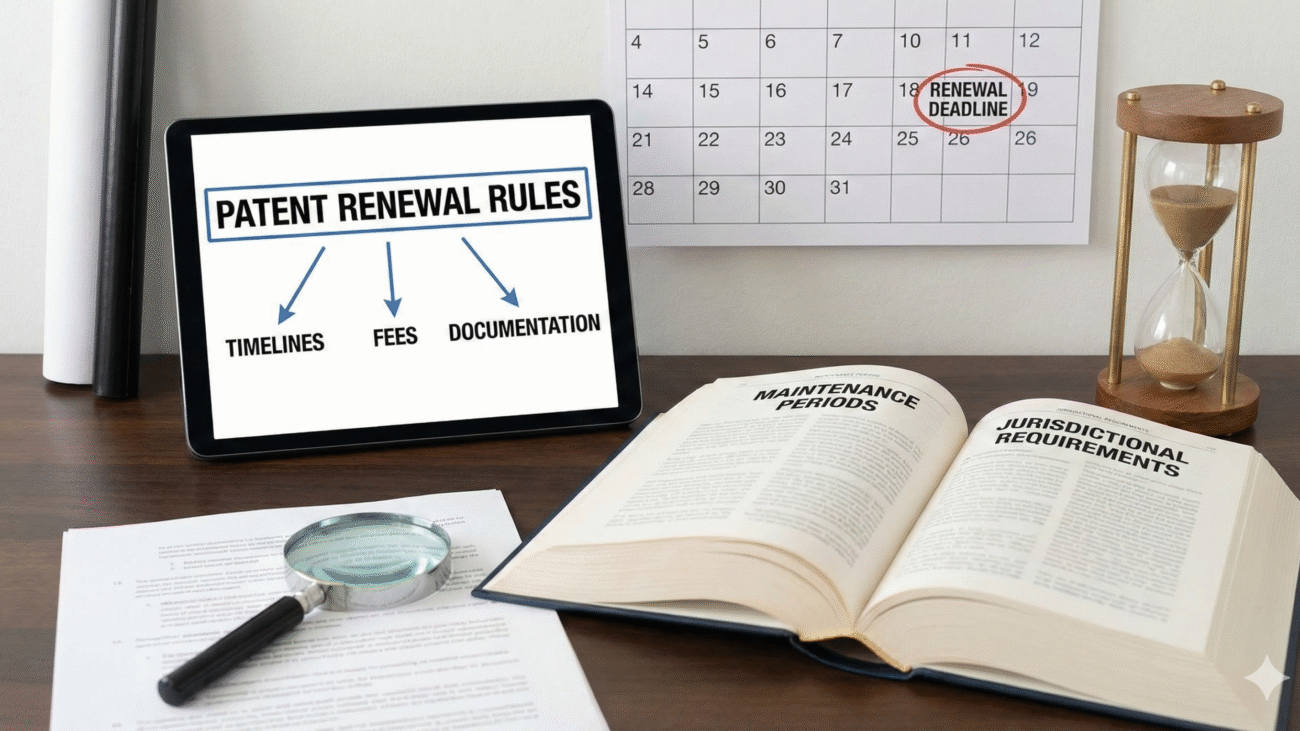
Patent renewal rules shown through a tablet screen, calendar deadline, law books, magnifying glass, and hourglass illustrating timelines, fees, and documentation.

Patent Renewal Rules: How to Keep Your Company’s Patent Active for the Full Term

Keeping a patent active isn’t automatic. Even after your patent is granted, you must follow the patent renewal process carefully to keep your rights protected for the full term. Many companies lose valuable protection simply because they miss a renewal deadline. The good news is that renewing a patent is easy once you understand how the process works.

Why Patent Renewal Matters

A patent gives your company exclusive rights over your invention. But that protection lasts only if you renew it on time. Missing a renewal deadline can cause the patent to lapse, which means anyone can legally use, make, or sell your invention. Renewals are your way of confirming that your innovation is still valuable to your business.

When Patent Renewal Starts

In most countries, including the UK, the first renewal is due on the fourth anniversary of your patent filing date. After that, renewals are required every year until the patent reaches its maximum term, usually 20 years. If you delay payment, there is a grace period, but late fees apply. If you go past the grace period, the patent expires permanently.

Understanding the Patent Renewal Process

The patent renewal process is straightforward when handled on time. Here’s what your company needs to do:

1. Track Your Renewal Deadlines

Mark all renewal years clearly. Companies often rely on internal reminders or renewal services that monitor due dates and alert you ahead of time.

2. Pay the Official Renewal Fee

Fees typically increase with each year. Early years cost less, while later renewals cost more because the patent becomes more valuable as your business grows.

3. Keep Proof of Payment

Always store confirmation emails, receipts, or renewal certificates. These documents help avoid disputes and serve as compliance records.

4. Use a Patent Service If Needed

If you manage multiple patents or operate globally, working with a professional patent service can prevent costly mistakes. They handle paperwork, monitor deadlines, and handle multi-country renewals for you.

What Happens If You Miss a Renewal?

If you miss a deadline but are still within the grace period, you can renew by paying a late fee. If the grace period passes, the patent expires, and your exclusive rights end. Restoring a lapsed patent is costly and not always guaranteed.

Stay Active, Stay Protected

Consistent renewals keep your patent strong and enforceable. By understanding the rules and staying organized, you ensure your innovation remains protected for its full legal life.

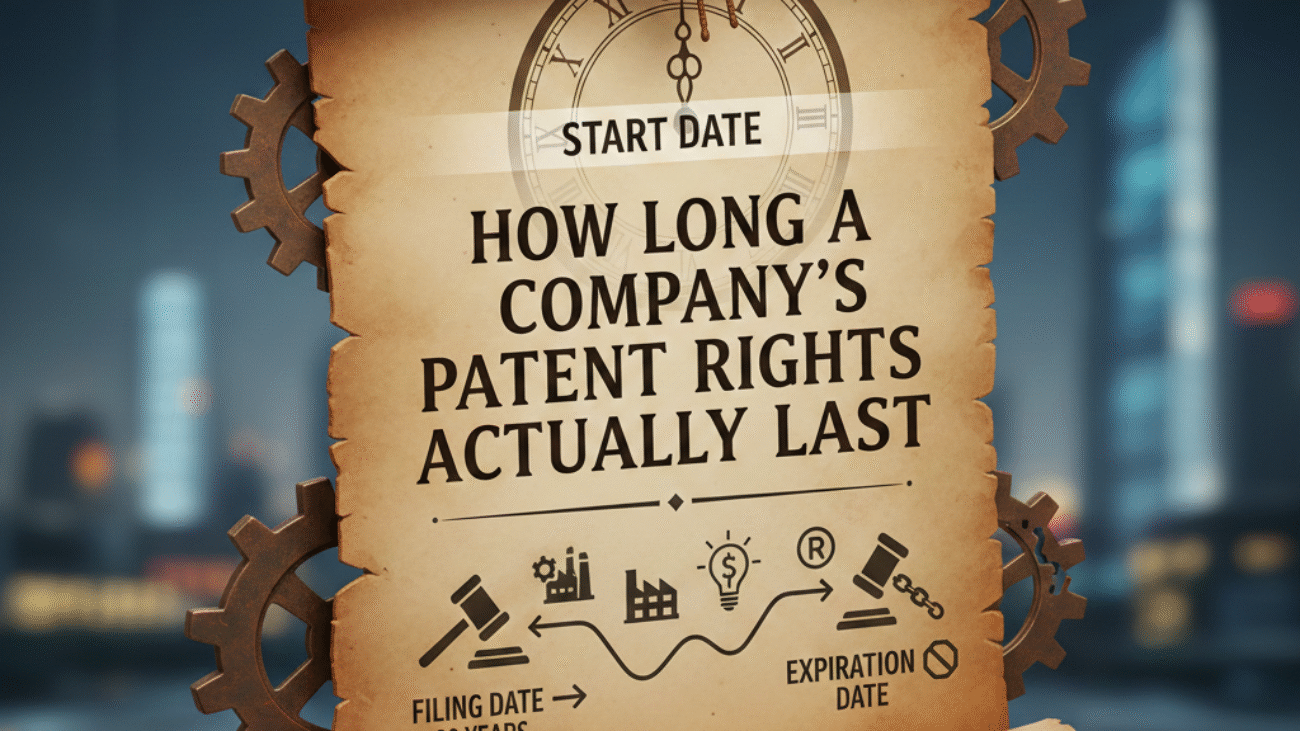
3D illustration of a parchment scroll displaying the timeline of company patent rights, highlighting the standard 20-year duration from the filing date to the expiration date, set against a corporate city background with industrial gears.

Patent Service Explained: How Long a Company’s Patent Rights Actually Last

When a company creates something new, a patent is often the first shield of protection they look for. But many businesses still aren’t sure how long these rights actually last. If you’re exploring patent service options or filing your first patent, understanding the timeline is essential. It helps you plan your business strategy, protect your innovation, and stay ahead of competitors.

What a Patent Really Protects

A patent gives a company exclusive rights to make, use, and sell its invention. This protection stops others from copying or profiting from your idea without permission. A proper patent service ensures your invention is documented, filed correctly, and protected from legal challenges.

How Long Does a Patent Last?

The duration depends on the type of patent:

1. Standard (Utility) Patents – Up to 20 Years

Most companies file utility patents. These cover new processes, machines, software systems, and improvements. A utility patent typically lasts 20 years from the date you file the application. You must pay maintenance fees to keep it active.

2. Design Patents – 15 Years

Design patents protect the visual look of a product. These last 15 years from the date they are granted.

3. Innovation Patents (Where Applicable)

Some countries previously offered shorter-term innovation patents. Rules vary based on local laws. A smart patent service guides you on which type applies to your invention and how long each will protect you.

Why Patent Duration Matters for Companies

Understanding the lifespan of a patent helps you:

  • Plan product launches
  • Prepare for renewals and maintenance fees
  • Avoid infringement risks
  • Protect long-term revenue streams
  • Develop future versions of your product before the patent expires

When a patent expires, competitors can legally copy your invention. That’s why good patent planning is a key part of business strategy.

Keep Your Patent Alive With Professional Support

Missing a renewal deadline or filing incorrectly can cost your company its entire protection. A reliable patent service helps you track timelines, handle paperwork, and maintain your rights without stress. If your company is innovating, don’t leave protection to chance. Patents may last 15 to 20 years, but only when they’re filed and managed correctly. With the right guidance, you can secure your invention and enjoy the full lifespan of your patent rights.

UK trademark class list services infographic showing classes 5, 9, 25, 35, 41, and 43 with icons for goods and services categories.

Why Selecting the Correct Trademark Class in the UK Matters for Legal Protection

When you apply for a trademark in the UK, choosing the right class isn’t just a formality. It decides how strong your legal protection will be and what you can defend your brand against in the future. The trademark class list UK is divided into 45 classes, and if you select the wrong one—or miss a class you should have covered—you risk losing exclusive rights to your own name, logo, or brand identity. That’s why understanding the trademark class list for services and goods is so important for every business, especially startups and growing brands.

1. The Right Class Defines the Scope of Your Protection

Your trademark only protects what you file it for. If you choose the wrong class, your rights won’t cover your actual products or services. For example, if you offer digital marketing services but file under clothing, your trademark won’t stop anyone offering marketing services from using an identical or similar name. This is where trademark class list services become critical. Service-based businesses must file under Classes 35–45 to ensure their protection matches what they offer.

2. Correct Classes Prevent Costly Legal Problems Later

Choosing an incorrect class can lead to:

  • Trademark rejection
  • Vulnerability to infringement
  • Expensive rebranding
  • Refiling costs
  • Loss of business reputation

A solid understanding of the trademark class list UK helps you avoid these risks. Filing once with the right classes saves money, time, and stress.

3. You Can Expand Your Protection by Choosing Multiple Classes

Many modern businesses offer more than one type of service or product. A tech company may offer software (Class 9), online tools (Class 42), and digital marketing (Class 35). If you only pick one class, your brand protection is incomplete. Choosing multiple classes helps secure your full business model and prevents competitors from exploiting gaps you left open. This is why larger brands often file across 5–15 classes.

4. Filing Without Understanding Classes Can Lead to Invalidation

Even if your trademark gets approved, it can be challenged later if it’s in the wrong class or inaccurately describes your services. Competitors can ask the IPO to invalidate your trademark if you aren’t actually using it for the class you selected. Using the trademark class list for services accurately prevents such legal challenges.

5. Right Classes Make International Expansion Easier

If you plan to expand globally, your UK filing will help guide your international protection. The UK follows the Nice Classification, which is used in most countries. By aligning your filing with the proper classes now, you set a clear path for future filings in the EU, US, Canada, and others.

6. Professional Guidance Helps You File Confidently

Many businesses choose expert help because the classification rules can be confusing.
A trademark professional can:

  • Identify all applicable classes
  • Prevent over-filing or under-filing
  • Ensure accurate descriptions
  • Improve your approval chances

This ensures your protection is complete and future-proof.

Final Thoughts

Selecting the right trademark classes is one of the most important steps in building a legally protected brand. Whether you’re reviewing the trademark class list UK, checking categories for your services, or planning for future growth, taking time to get this right will strengthen your brand and keep it safe for years. If you need help choosing the correct classes, using the trademark class list services or expert support makes the whole process far simpler and far safer.

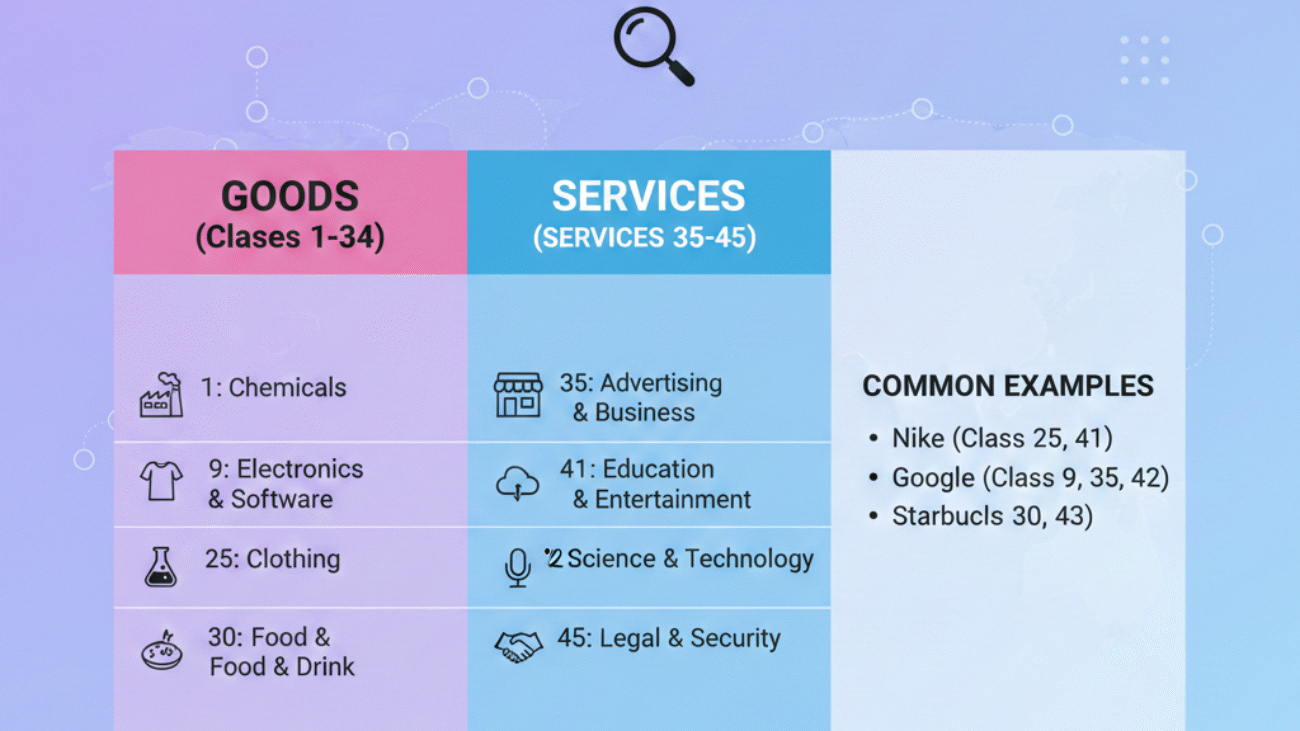
Trademark class list graphic showing goods classes 1–34, services classes 35–45, and common brand examples like Nike, Google, and Starbucks.

UK Trademark Class List for Startups: The Only Breakdown You Need

Understanding the trademark class list is one of the most important steps for any startup planning to protect its brand in the UK. Your trademark is only protected in the classes you choose, so picking the right categories can decide whether your brand stays legally safe as you grow. This simple breakdown helps you navigate the trademark class list search and the key groups every new business should know.

1. Core Classes for Products (Class 1–34)

If your startup sells physical goods, these classes cover everything from cosmetics and clothing to tech devices and machinery. Make sure you match your product exactly to the right class to avoid rejection or gaps in protection.

2. Service-Based Classes (Class 35–45)

Most startups fall under service classes like advertising (Class 35), software services (Class 42), education (Class 41), or financial and legal services (Class 36). The international trademark class list follows the same structure, making it easier if you scale globally.

3. Multi-Class Strategy

If your business offers both products and services, register in multiple classes. This gives your startup broader protection and prevents competitors from using similar names in related industries.

A smart class selection helps your brand stay protected from day one, without overspending on unnecessary classes.

Trademark-Clearance-Search

Common Mistakes to Avoid Before Filing a UK Trademark

Filing a UK trademark might look simple, but many businesses make mistakes that delay their application or leave their brand unprotected. One of the biggest issues is choosing the wrong class during filing. This is where trademark class list services become essential. A trademark only protects your brand in the specific classes you select, so even a small mistake can cost you time, money, and legal protection.

A common error is assuming that one class covers everything your business does. In reality, the UK system uses a detailed trademark class list for services, and each class represents a different category. If you don’t select the right ones, your application may be rejected or offer incomplete protection. For example, a digital marketing agency and a software company fall under different service classes, even though both operate online. Choosing the wrong class limits your rights and can open the door for others to use a similar name in your industry.

Another mistake is filing without a proper trademark search. Many applicants skip this step, only to discover later that a similar name is already registered. This leads to opposition, legal issues, or forced rebranding. A simple pre-search helps you avoid conflicts and gives your application a stronger chance of approval.

Businesses also fail to plan for future growth. If you offer one service today but expect to expand soon, you must consider that when reviewing the trademark class list for services. Filing strategically now saves you from costly changes later.

Finally, rushing the application is never a good idea. Incomplete forms, unclear descriptions, or incorrect classes lead to delays. Working with professionals who understand trademark class list services ensures your application is accurate, compliant, and fully aligned with your business.

Taking time to prepare properly helps you secure strong, long-lasting trademark protection in the UK.

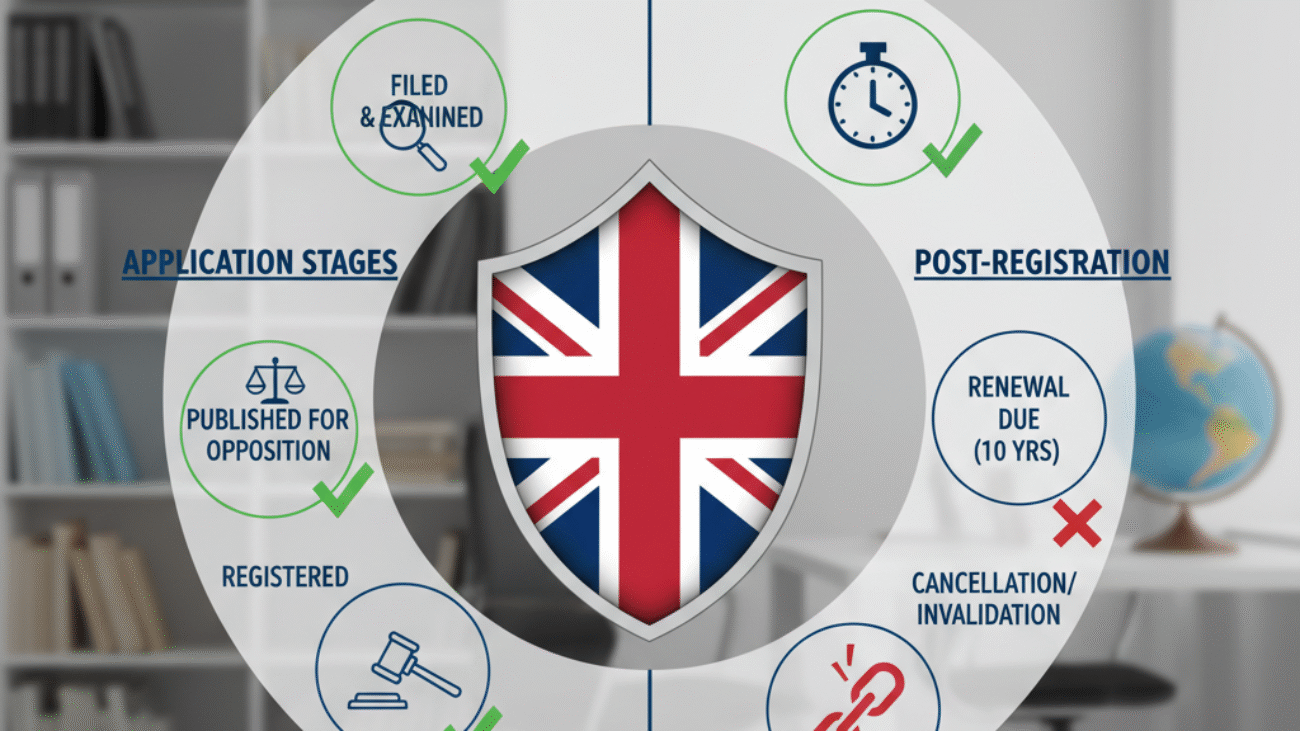
UK trademark status infographic showing application stages, renewal timelines, and cancellation indicators with UK flag shield – guide to check trademark status.

How to Check if Your Trademark Is Still Valid in the UK

If you own a brand in the UK, checking whether your trademark is still active is one of the most important steps in protecting your business. Many owners assume their registration is secure for life, but that’s not the case. Trademarks need regular maintenance, renewals, and monitoring. Knowing how to check trademark status can save you from unwanted legal issues and help you catch problems before they grow.

The quickest way to check trademark status in the UK is through the official UK Intellectual Property Office (UKIPO) online search tool. It lets you look up your trademark number, owner name, or keyword to see whether your registration is active, expired, objected, opposed, or removed. This simple trademark status check helps you understand exactly where your rights stand.

When you enter your trademark into the UKIPO database, you’ll find a detailed record showing the application date, registration date, renewal deadline, and any recent changes. If your trademark is marked as “Registered,” it’s active and protected. If it says “Expired,” your rights have lapsed, and competitors may be able to use or register similar marks. This is why doing a regular check on trademark status is essential, especially if your business is growing or if you operate in competitive markets.

You should also check for any opposition or objections that may have been filed. Sometimes, trademarks face legal challenges after filing, and owners miss the notices because they aren’t monitoring their status. Keeping track of these updates ensures you respond in time and avoid losing rights by inaction. Another important detail is the renewal date. UK trademarks must be renewed every ten years. If you miss the renewal window, the trademark can be removed from the register. Even though late renewal options exist, they come with extra fees and risk. A regular trademark status check helps you avoid these unnecessary costs.

If the process feels confusing or time-consuming, professional help is always an option. A trademark service can monitor your status, alert you to deadlines, and handle any issues that come up. This removes the stress and gives you peace of mind knowing professionals are watching over your brand. Checking whether your trademark is still valid doesn’t take long, but it can make a big difference. Stay informed, stay proactive, and keep your UK trademark protected for the long run.

Illustration showing UK trademark registration fees with trademark symbols, UK flag elements, and financial icons representing rising costs.

Why UK Trademark Registration Fees Are About to Skyrocket (And What You Can Do About It)

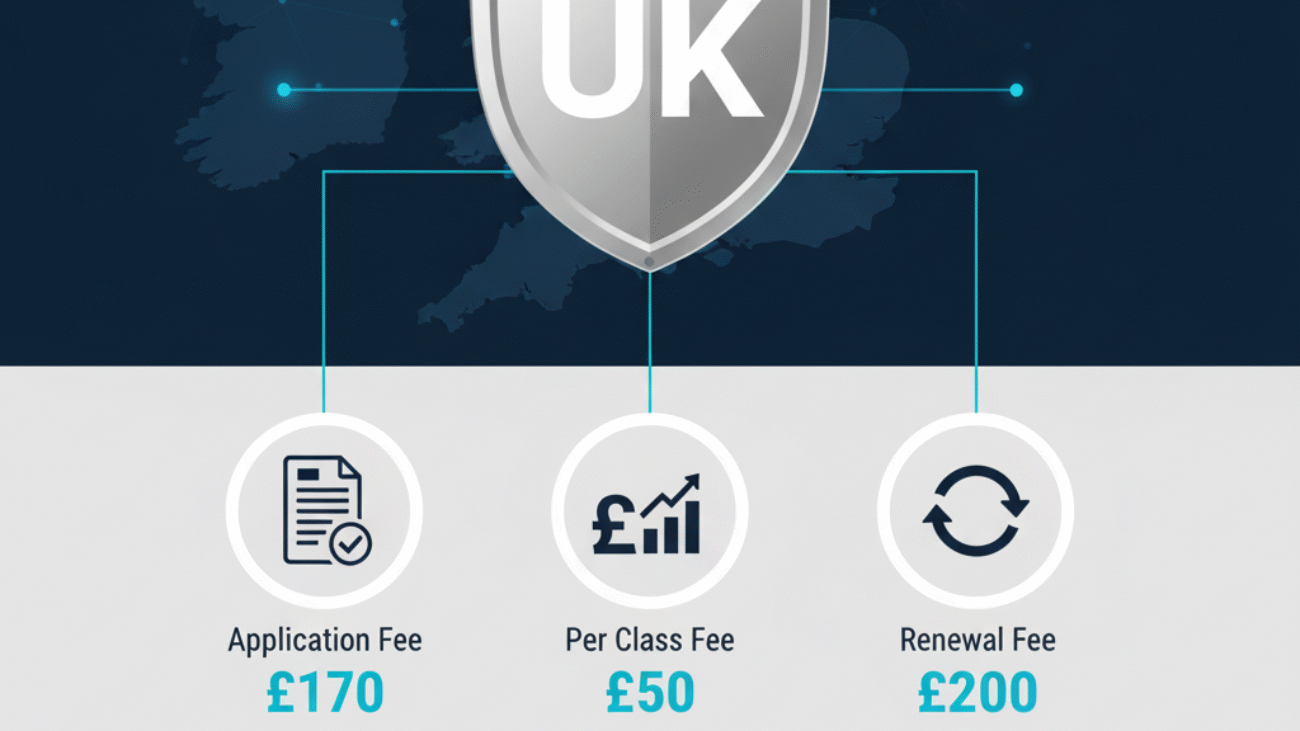
If you’re planning to protect your brand in the UK, now is the time to pay attention. UK trademark registration fees are expected to rise in 2025, and the increase may affect thousands of businesses, startups, and creators who rely on trademark protection to secure their names and logos. While the government hasn’t released the final numbers yet, early indications suggest a noticeable jump in filing costs, renewal fees, and logo applications.

So why are trademark registration fees 2025 heading upward? Several factors are playing a part. Inflation and rising administrative costs are pushing intellectual property offices to adjust their fee structures. The system also needs ongoing upgrades to keep up with digital processing, international filings, and a higher number of trademark disputes. All of this means businesses may soon be paying more to file and maintain their trademarks.

For many companies, especially small brands and startups, even a small rise in fees can have a big impact. A trademark is more than just paperwork. It protects your identity, keeps competitors from copying your name, and helps build trust with customers. That’s why understanding the upcoming changes—and preparing for them—is so important.

If you’re considering registering a logo, don’t wait. Logo trademark registration fees are also expected to increase, and filing before the new rates take effect can save you money. Registering early also protects your rights sooner, which matters if your industry is competitive or fast-growing. A registered logo gives you legal control over your visual identity, something that becomes even more valuable as you scale.

The good news is that you still have time to act. Filing your trademark now means you’ll lock in today’s lower fees and avoid the higher costs coming in 2025. Many businesses are choosing to complete their applications early so they don’t get caught in the rush once the fee changes are officially announced.

If you’re unsure where to start, consider getting help from a professional trademark service. They can perform a proper search, prepare your application, and guide you through the process without delays or costly mistakes.

With UK trademark registration fees set to rise, the smartest move is to act before the changes kick in. Protect your brand, save money, and stay a step ahead of the 2025 fee increase.