
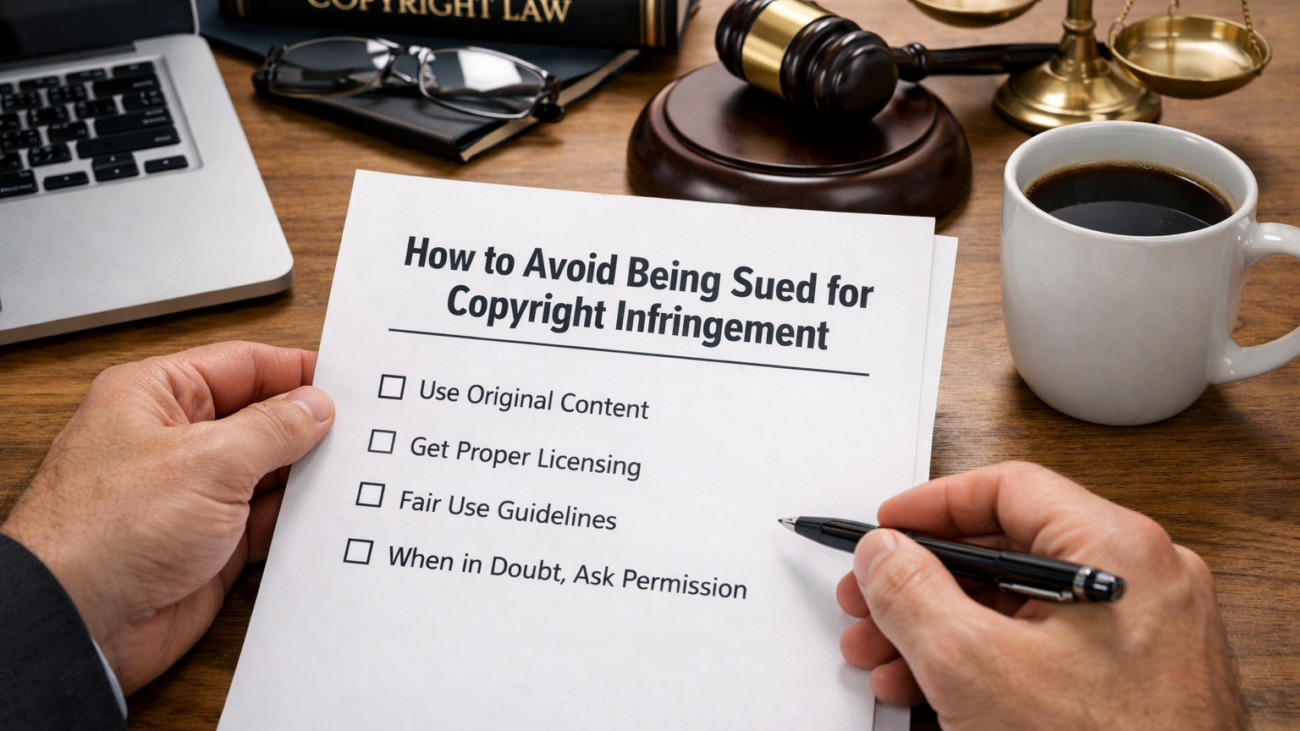
Copyright infringement lawsuits often don’t start with bad intentions. Most people get into trouble simply because they didn’t realise a piece of content was protected. Whether you run a business website, manage social media, design marketing materials, or create digital products, understanding how to avoid copyright infringement is essential for staying safe and stress-free.
Understand What Copyright Actually Protects
Copyright protects original works such as images, videos, written content, music, software, illustrations, and designs. If you didn’t create it yourself, you should assume it is protected unless clearly stated otherwise. Just because something is available online does not mean it is free to use. Many copyright infringement cases begin with this simple misunderstanding.
Always Use Content With Clear Rights
The safest way to avoid copyright infringement is to use content you own or content you have permission to use. This includes purchasing proper licenses, using reputable royalty-free platforms, or working with creators who provide written consent. Keep records of licenses and invoices. These documents matter if your usage is ever questioned.
Be Careful With Images and Media
Images are one of the most common sources of copyright infringement claims. Copying photos from Google, social media, or competitor websites is risky. Even modifying an image does not automatically make it legal to use. The same applies to videos, music, and icons. When in doubt, don’t use it.
Don’t Assume “Fair Use” Will Protect You
Many people rely on fair use without fully understanding it. Fair use is limited and depends on context, purpose, and jurisdiction. Commercial use, promotional content, or branding materials rarely qualify. Assuming fair use incorrectly is one of the fastest ways to invite a copyright infringement dispute.
Monitor and Audit Your Content Regularly
Over time, websites and social media accounts accumulate content from different sources. Regularly reviewing older posts, blog images, and marketing materials helps identify potential risks early. Removing or replacing questionable content before a complaint arises can prevent legal trouble.
Act Quickly If You Receive a Warning
If you receive a copyright infringement notice, don’t ignore it. Take time to understand what content is involved, pause its use if necessary, and gather any proof of permission or licensing. A calm, professional response can often resolve the issue before it escalates.
Final Thoughts
Avoiding a copyright infringement lawsuit is less about legal expertise and more about awareness, caution, and respect for creative work. By using content responsibly, keeping proper records, and acting quickly when issues arise, you protect not just your business, but your peace of mind too.